ServicesEmergency HVAC Repair
Emergency HVAC Repair in Fairfield, Any Hour
If your furnace dies at 2 a.m. or your AC gives out in the middle of a July heat wave, we pick up the phone day and night. You get a plain diagnosis, a written quote before work starts and no emergency or after-hours fees.
When a breakdown can't wait until morning
Most HVAC problems can be booked for a convenient day. Some cannot. A furnace that stops on a night well below freezing puts pipes, pets and people at risk, and an AC failure during a stretch of hundred-degree afternoons is hard on young children and older relatives. That is what our emergency HVAC repair is for.
We keep the same care at night that we bring to a scheduled visit. Floors are covered, the work area is left clean, and you hear what we found in plain terms before we touch a tool. Because cold snaps on the Palouse edge tend to arrive fast, we carry the parts that most often fail in the furnaces and heat pumps common to homes here, so many repairs finish on the first visit.
What you get on an emergency call
A person answers
The person who takes your call asks useful questions, helps you keep the house safe until we arrive and sends a technician on the way.
Safety comes first
With a gas furnace, we look for carbon monoxide, flame trouble and gas leaks before anything else. Anything unsafe gets shut off, and we explain the reason.
A diagnosis you can see
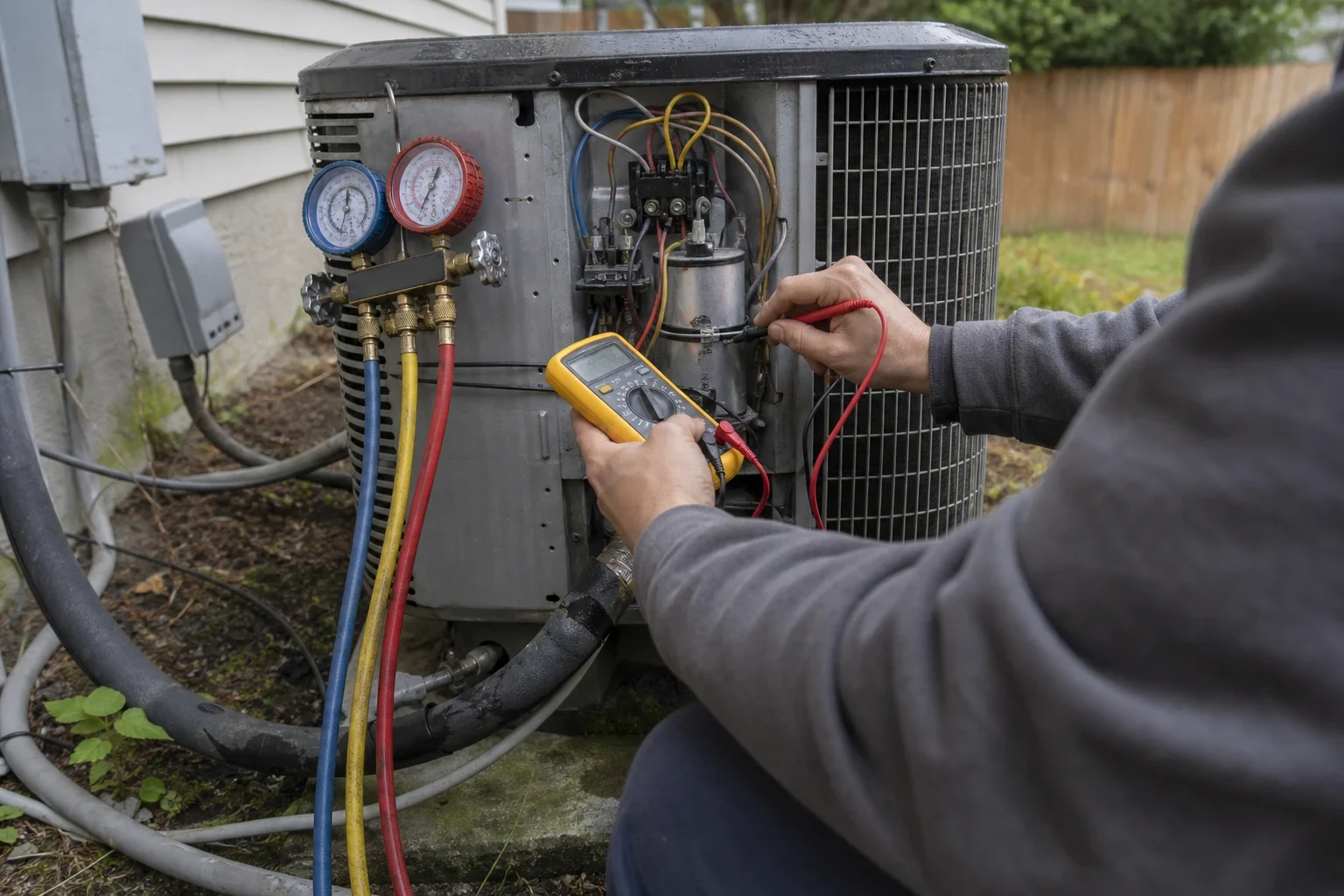
Depending on the problem, we test the igniter, flame sensor, capacitors, contactors, pressure switches and refrigerant circuit, and show you the bad part when possible. The diagnostic fee counts toward the repair.
The price in writing first
You read the cost on paper and make the call. The time of night adds nothing, because there are no emergency or after-hours fees.
A fix, or a safe stopgap
We fix most common breakdowns during the visit. When a part needs ordering, we try to get some heat or cooling running safely until it comes in.
When to call for emergency repair
No heat below freezing
The thermostat asks for heat and the furnace or heat pump stays silent or blows cold. In freezing weather, a home loses its warmth fast.
You smell gas or the CO alarm goes off
Get out of the house first, then call the gas utility or 911. When it is safe again, we can track down and fix the cause.
A burning or electrical smell
A hot, metallic or melted-plastic odor from the furnace or air handler often means a motor is overheating or a connection is damaged. Turn the system off and have us look before running it again.
No cooling in dangerous heat
When the indoor temperature is rising toward unsafe levels, above all with a vulnerable person in the house, the repair should not wait until a weekday.
A breaker that keeps tripping
If the breaker trips every time the system starts, take it as a warning. Resetting it again and again can ruin the compressor or blower.
How the repair runs
- 1
You call, we triage
We ask what you are seeing and hearing, walk you through any immediate safety steps, and confirm the technician is on the way.
- 2
Safety and diagnosis
On arrival we protect your floors, check the system for hazards, then trace the fault to its source rather than guessing.
- 3
Written quote, your decision
You get the repair cost in writing with what it covers. If repair is not the sensible choice for an older unit, we say so plainly and leave replacement for a calmer day.
- 4
Repair, test, tidy
We complete the repair, run the system through a full cycle, confirm safe operation, and clean up before we leave.
What sets the price of an emergency repair
When you call has no effect on the price, because we charge no emergency or after-hours fees. The cost depends on what broke and what the fix takes. You see the figure in writing before we start.
- Which part broke
- Replacing a flame sensor or capacitor is a smaller repair. A blower motor, inducer motor or control board runs higher, and a compressor is the biggest single repair.
- Refrigerant repairs
- A leak has to be located, sealed and recharged. Older units may use a refrigerant type that changes the price.
- Getting to the equipment
- A furnace in a cramped crawlspace or attic, or an outdoor unit under snow, takes more time to reach and repair safely.
- Whether the part is on hand
- We carry the common parts on the truck. Parts specific to older or less common brands sometimes have to be ordered.
Questions callers often ask
Something not covered here? (509) 707-8588
Does calling late at night or on a holiday cost more?
No. We charge no emergency or after-hours fees, so a repair at midnight costs what the same repair would on a weekday afternoon. You see the price in writing first.
What can I do until you arrive?
If you smell gas or a CO alarm goes off, take everyone outside and call the gas utility or 911. Without heat, close the blinds, shut interior doors and open the cabinets under sinks on exterior walls so warm air gets to the pipes. Use space heaters carefully and keep them away from anything that can catch fire.
Do I lose the diagnostic fee if I approve the repair?
No. It is credited toward the repair, so you never pay twice for one visit.
Will you push a new system on me at 3 a.m.?
No. We start by making your home safe and comfortable again. If the equipment is close to worn out, we say so honestly, and you can consider furnace installation or a heat pump later, once you have time to think it over.
Do you come out beyond Fairfield?
Yes. Our emergency calls cover the nearby area, Spokane Valley, Liberty Lake, Cheney and Spokane included. Ask when you call and we will confirm.
How do I prevent the next breakdown?
A lot of breakdowns begin with a worn part a technician would have spotted. Our Maintenance Plans come with seasonal tune-ups, discounted repairs and priority scheduling.
No heat or cooling right now?
Describe what the system is doing and we will send a technician. You get a written quote before the repair starts.