ServicesFurnace Repair
Fairfield Furnace Repair
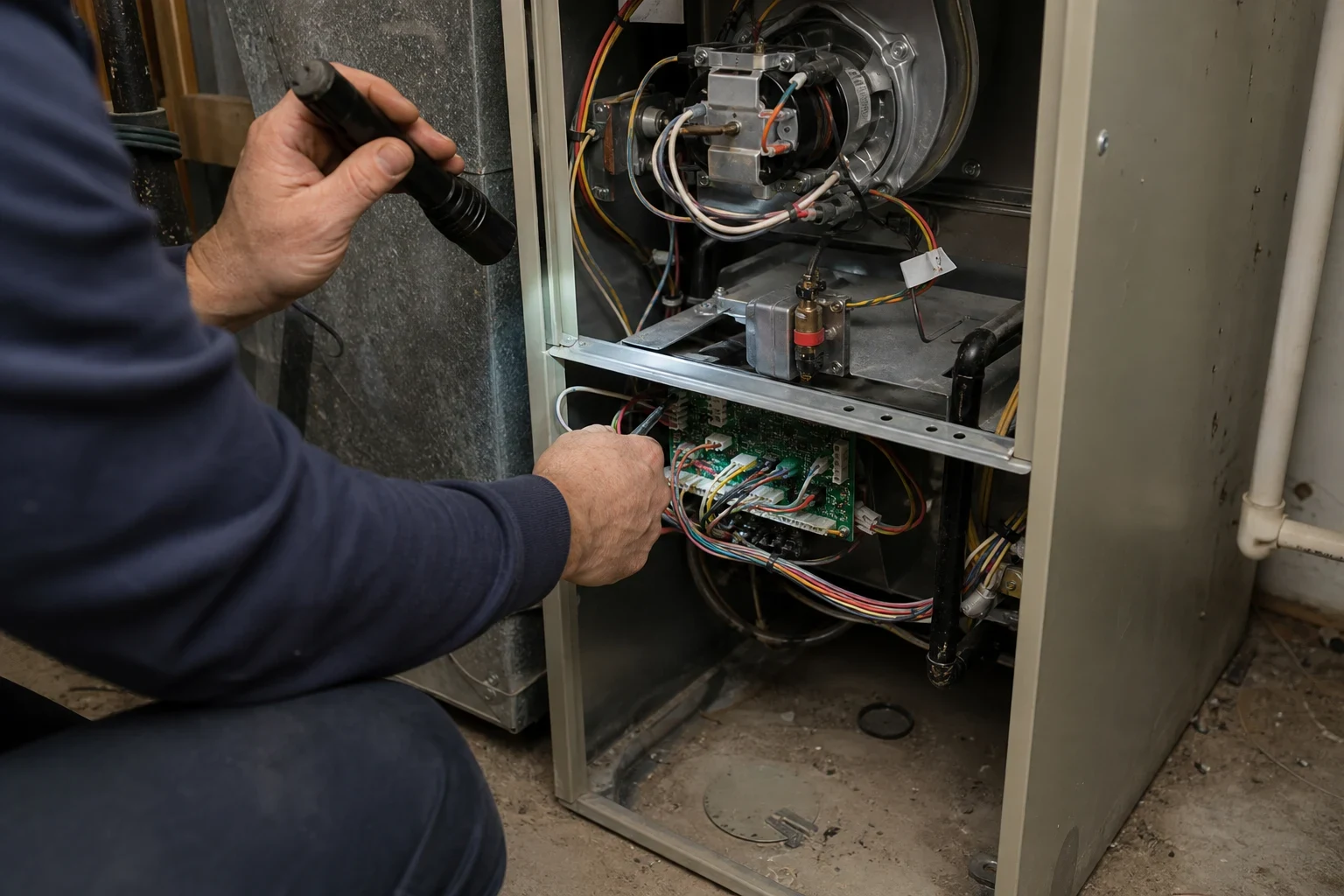
If your furnace won't light, blows cold air or keeps shutting off early, we track down the real cause, show you the evidence and give you a written quote before any work starts. Gas, propane and electric furnaces, any hour of the day or night.
Repair first, when repair makes sense
Most furnace failures come down to a small number of parts: igniters, flame sensors, pressure switches, inducer motors, blower motors and control boards. A good repair replaces the part that failed and checks why it failed, so the same call does not happen again a month later.
Inland Northwest winters run long and dry, and a furnace here can run for hours on a cold night. That steady load is hard on blower bearings and igniters, which is why we test the whole sequence of operation, not just the part that quit.
If your furnace is near the end of its life and a repair would cost more than it is worth, we will say so plainly and lay out both paths. You decide. Our furnace installation page covers what replacement looks like.
What a furnace repair visit includes
Full sequence-of-operation test
We watch the furnace start from a call for heat through ignition, flame proving and blower start. Each step tells us where things break down.
Safety and combustion checks
We inspect the heat exchanger for cracks and corrosion, check the flue and venting, and test for carbon monoxide at the appliance. A furnace that runs is not the same as a furnace that runs safely.
Electrical and controls
We test the control board, limit switches, capacitors and thermostat wiring. Loose connections and worn relays cause many intermittent no-heat calls.
Airflow at the furnace
We check the filter, the blower wheel and the blower motor. A clogged filter or dirty wheel can make a sound furnace overheat and shut itself off.
A written quote and clear photos
Before we replace anything, you get a written quote and a look at the worn or failed part. Approve the work, and what you paid for the diagnosis comes off your repair bill.
A clean finish
We use drop cloths, take the old parts with us unless you want them, and leave the cabinet closed and the area as we found it.
Signs your furnace needs attention
Cold air from the vents
The blower runs but the burners do not light, or they light and drop out. A dirty flame sensor or failing igniter is a common cause.
Short cycling
The burners fire, heat for a brief stretch, then stop, and the pattern repeats through the evening. This often points to overheating from restricted airflow or a faulty limit switch.
New noises
Squealing, rattling or a loud bang at startup are worth a call. Bearings wear, panels loosen, and delayed ignition can stress the heat exchanger.
Rising gas or propane use
If your bills climb while the weather holds steady, the furnace may be running longer to keep up. Worn parts quietly cost fuel.
Yellow flame or a smell
Healthy burner flames are mostly blue. A lazy yellow flame, soot around the burners or a burning odor that lingers calls for a technician. A rotten-egg smell is a different matter: get everyone outdoors, then phone the gas company or your propane supplier once you are outside.
What a furnace repair visit looks like
- 1
We hear you out
Describe what the furnace is doing and when it began. A few questions about its fuel and age help the technician bring the most likely parts.
- 2
Finding the fault on site
We work through the system from the thermostat to the flue until we locate the problem, and share photos of anything inside the cabinet.
- 3
A written price, then your call
You get the repair, the part and the price in writing. No part is replaced until you give the go-ahead.
- 4
Fix it and test again
After the repair, we run the furnace through several complete cycles and take the safety readings again before we pack up.
How a furnace repair is priced
Two things set the price: the failed part and the time it takes to get to it. After diagnosing, we write the price down, and that figure is what you pay. There are no emergency or after-hours fees, so a midnight repair costs what a Tuesday repair does.
- The failed part
- A flame sensor cleaning or new igniter sits at the lower end. Control boards, inducer motors and blower motors cost more in parts.
- Brand and part availability
- Common parts for major brands are easy to find. Boards made for older or less common furnaces can cost more and take longer to come in.
- Furnace location
- A furnace in an open basement takes less time than one in a tight crawlspace or attic.
- Age and general wear
- On an older furnace, one bad part can reveal others that are tired. We point out what is wearing, and you choose what to fix now.
Furnace repair questions we hear
Something not covered here? (509) 707-8588
Do you come out at night or on weekends?
Yes. Our emergency HVAC repair is available 24/7, with no added charge for nights, weekends or holidays. If you lose heat on a cold night, call and we will set up a visit.
Is an older furnace worth repairing?
Often it is, when the heat exchanger is sound and a single part has failed. With a cracked heat exchanger or repeated major failures, we explain why a replacement may be the better use of your money and give you a free estimate on a new furnace.
Do you work on propane furnaces?
Yes. Plenty of homes outside town heat with propane, and we repair those along with natural gas and electric furnaces. Propane furnaces use their own orifices and pressure settings, and we check both during the visit.
Does the diagnostic fee count toward the repair?
Yes. If you go ahead with the repair, the diagnostic fee is credited to it. Either way, you know exactly what is wrong and have a written quote for fixing it.
How can I head off a breakdown next winter?
A yearly tune-up before the heating season finds worn igniters, weak capacitors and dirty sensors before they fail. Our maintenance plans include tune-ups, repair discounts and priority scheduling.
Get warm again with a clear plan
Let us know what your furnace is doing and we will handle it from there. You get a careful diagnosis and a written quote before any work starts.